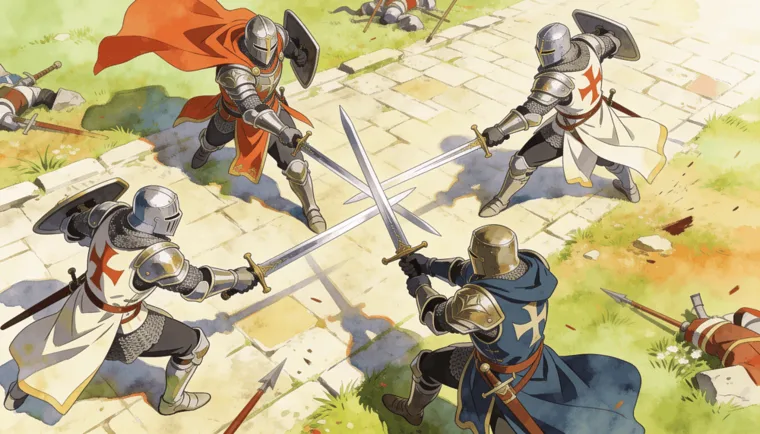
Total War
Sacrifice your protectors to mow down just as many enemy defenders at once. Court full, time to go on the offensive.

Deploy. Conspire. Overthrow.
Voltrine is a head-to-head card duel where everything plays out in threes. You deploy your characters, conceal your intentions and orchestrate plots to bring down the opposing court, all in real time.
The whole game fits in 30 cards: 15 values, each one doubled. The value decides the outcome of clashes, the name sets the tone. A card leans naturally toward one role, but nothing is fixed: it is the zone where you place it that makes it a protagonist, a protector or a conspirator.
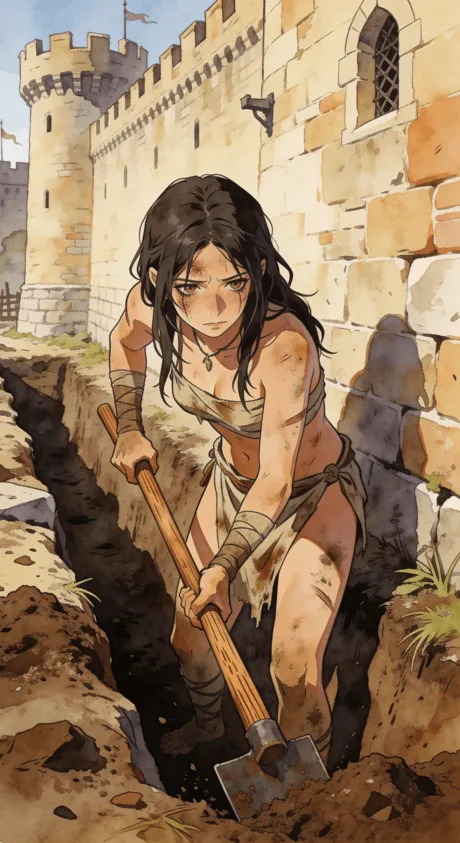 1
1
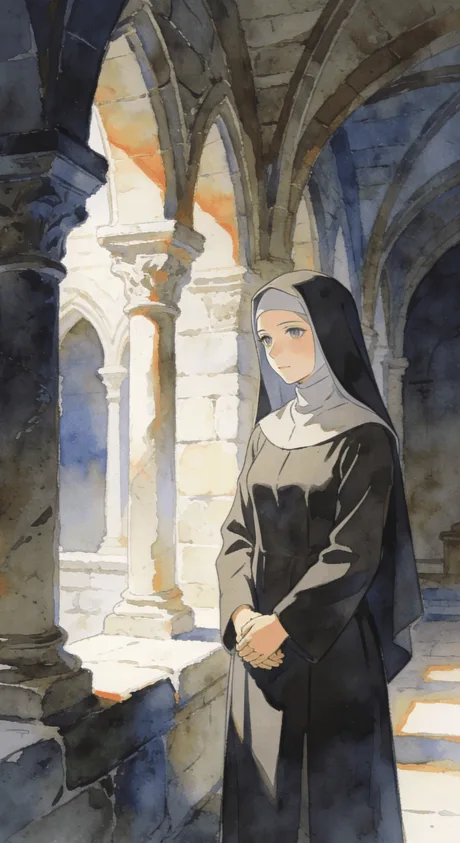 3
3
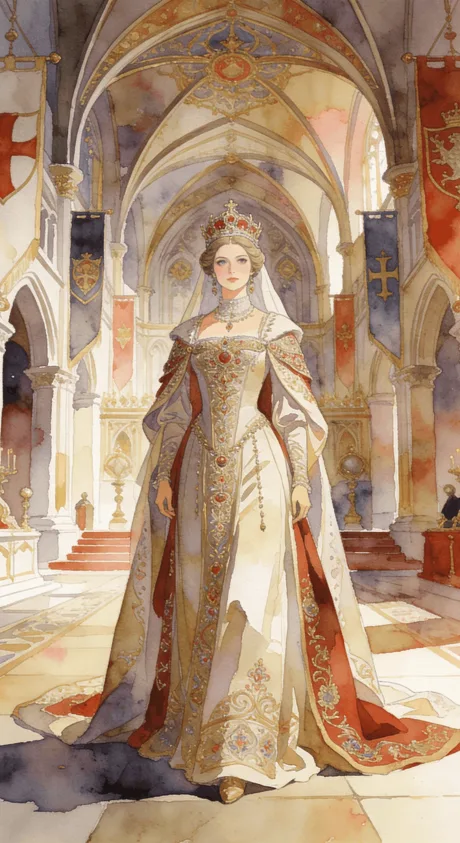 6
6
 15
15

The higher the value, the more a card dominates… except the wheel turns: the 1 topples the 15. No card is ever untouchable.
Three zones, three functions. Any card can occupy any of them: the same figure can hold your walls this turn, then plot in the shadows the next.
Your figureheads. Lose all three and the game is over: they are what your opponent will aim for.
The shield. Placed opposite a protagonist, a protector absorbs the blows meant for the Court.
Your agents in the shadows. You spend them to launch plots and strike the opposing court.
Every card leans toward one of the three groups: that is its predisposition. The cards visible on the board, yours and your opponent's alike, tip the balance, and the dominant group grants you a free action each turn. Hidden cards don't count, so you steer the dominance through what you reveal or conceal, and a face-up Hero weighs heavily. On a tie, several dominances apply at once.
Once per turn, deploy or redeploy a card without spending an action, enough to set up your figures or reshuffle your ranks for free.
Your protectors enter play face down, and you rearrange for free once per turn: perfect for re-hiding an exposed card.
Launch a conspiracy at no action cost, and earn the right to flip the opponent's hidden cards.
Each player lays out their cards across five distinct zones. Position matters there as much as value. Beside them, a sixth space: the Gardens, a board shared between both players.
A board common to both players: the discard forms a 3×3 grid where pairs and runs unlock bonus actions.
Facing you, the opposing board mirrored. Cards face down or revealed: it is up to you to read the intention behind every card back.
A turn revolves around one main action, rounded out with bonus actions, but each type of action can be played only once per turn. Here is the rhythm of a game.
You draw cards to rebuild your hand and set up your next moves.
You place your cards in the Court, the Walls or the Backstage: face up to intimidate, or face down to deceive.
Just one conspiracy phase per turn: you launch a plot with your conspirators, and your opponent may react before it resolves.
You discard the excess into the Gardens. The patterns you form (pairs, runs) can grant you a bonus action next turn.
To conspire is to attack. Each conspirator spent opens an option; it is up to you to assemble the right sequence.
A duel of values. If you win, the enemy protagonist falls, unless a protector stands in the way.
You remove an enemy wall to open a breach toward the Court it was guarding.
Three conspirators banded together eliminate a known target (a face-up card) for sure, regardless of values. The ultimate threat.
Poison, disguise, mask: accessories that skew a fight or shield a card at the decisive moment.
Promoted from a protagonist, the Hero dominates the battlefield, but if it falls, the game is lost at once. Its value, written V, defines all of its power.
The Hero naturally beats any card whose value runs from V-3 to V+3. Only the printed number counts: bonuses such as poison or disguise are not part of this calculation.
It can step in to block a conspirator launched against you. And when two Heroes face off, they neutralise each other.
On the attack, the Hero joins the conspiracy as a fourth conspirator: once per conspiracy phase, it strikes an enemy protector or protagonist. The only catch: it gains neither poison nor disguise.
Every time the Hero brings down a conspirator, it also overthrows an enemy protagonist in passing.
The Hero can only be struck down by a card whose natural number falls outside the V-3 to V+3 range, forcing the attacker to resort to poison or disguise to reach it.
Beyond everyday actions, each player holds three overpowering decrees, each playable only once per game. To be drawn at the right moment.
Sacrifice your protectors to mow down just as many enemy defenders at once. Court full, time to go on the offensive.
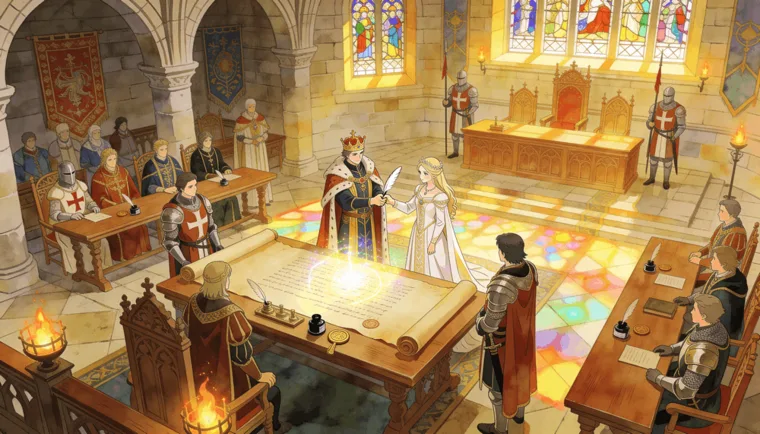
For one turn, no protagonist can be faced. A diplomatic shield to weather the storm.
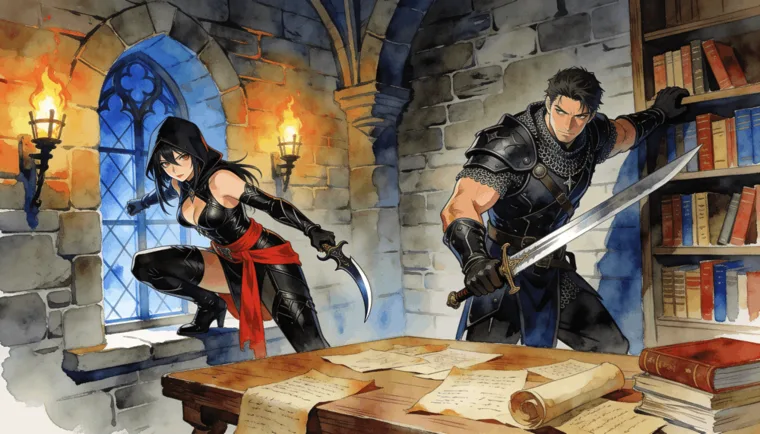
Reveal all of the opponent's hidden protagonists at once, at the cost of one of yours. Information has a price.
Several roads lead to the throne. All of them pass through your opponent's fall.
Create a game, challenge a friend or face a ranked opponent. The throne is waiting.
Play now